

Your shopping cart is empty!
 Call us: +1-(437)-290-7537
Categories
- Networking Accessories +-
-
Data Media Tapes
+-
-
Switches
+-
-
Cisco Switches
+-
- Cisco Switch Catalyst 9200
- Cisco Switch Catalyst 9300
- Cisco Switch Catalyst 9400
- Cisco Switch Catalyst 9500
- Cisco Switch Catalyst 9600
- Cisco Switch Catalyst 1000
- Cisco Switch Catalyst 3850
- Cisco Switch Catalyst 3650
- Cisco Switch Catalyst 2960
- Cisco Catalyst Micro Switches
- Cisco Catalyst Compact Switch
- Cisco Nexus 3000 Series
- Cisco Nexus 5000 Series
- Cisco Nexus 9000 Series
- Cisco Nexus 7000 Series
- Cisco Industrial Ethernet 1000 Switches
- Cisco Catalyst IE3000 Rugged Switches
- Cisco Industrial Ethernet 2000 Switches
- Cisco Industrial Ethernet 4000 and 5000 Switches
- Cisco Switch Catalyst 4500
- Cisco Switch Catalyst 4900
- Cisco Switch Catalyst 6800
- Cisco Switch Catalyst 3560
- Cisco Switch Catalyst 3750
- Cisco Switch Catalyst 6500
- Cisco Nexus 2000 Series
- Cisco Catalyst IE9300 Rugged Series
- Cisco Catalyst 1300 Series Switches
- Cisco Catalyst 1200 Series Switches
- Adapters
- Cisco MDS Series Switches
- FC Switches
- HPE Switches +-
- Juniper Switches +-
-
Arista Switches
+-
- Arista 720XP Series Switches
- Arista 7010T Series Switches
- Arista 7020R Series Switches
- Arista 7050X Series Switches
- Arista 7130 Series Switches
- Arista 7150 Series Switches
- Arista 7160 Series Switches
- Arista 7170 Series Switches
- Arista 7208R Series Ethernet Universal Leaf Platform
- Arista 7280R Series Switches
- Arista 7500R Series Universal Spine Platform
- Arista Switches Accessories
- Arista Other Switches
- Ubiquiti Switches & Others +-
- D-Link Switches +-
-
Cisco Switches
+-
-
Routers
+-
-
Juniper Routers
+-
- Juniper CTP150 & CTP2000 Platforms
- Juniper MX10003/MX10008/MX10016 Routers
- Juniper MX2020 5G Universal Routing Platforms
- Juniper MX960 5G Universal Routing Platforms
- Juniper PTX1000/3000/5000/10000 Routers
- Juniper Other Routers
- Juniper Router Modules & Cards
- Juniper Router Licenses
- Juniper Routers Services
- Juniper Router Accessories
- Juniper PTX1000
- Ubiquiti Routers & Expansion Modules +-
-
Cisco Routers
+-
- Cisco Router ISR 4000
- Cisco Router ISR 1900
- Cisco Router ISR 2900
- Cisco Router ISR 3900
- Cisco Router ISR 1100
- Cisco Router ISR 800
- Cisco Router ISR 900
- Cisco Router ASR 900
- Cisco Router ASR 1000
- Cisco Router ASR 5000
- Cisco Router ASR 9000
- Cisco 8000 Series Routers
- Cisco Router 10000 Series
- Cisco Router 12000 Series
- Cisco Router 7200 Series
- Cisco Router 7600 Series
- Cisco Industrial Routers
- Cisco Router NCS 6000
- Cisco Router NCS 5000
- Cisco Router NCS 4000
- Cisco Router NCS 2000
- Cisco Router NCS 1000
- Cisco Router NCS 540
- Cisco Gateway
- Cisco Routers CBR Series
- Cisco Router ISR 1800
- Cisco Router ISR 2800
- Cisco Router ISR 3800
-
Juniper Routers
+-
-
Firewalls
+-
- Sonicwall Firewalls
-
Cisco Firewalls
+-
- Cisco ASA 5500 Series
- Cisco Firepower 1000 Series Appliances
- Cisco Firepower 2100 Series Appliances
- Cisco Firepower 4100 Series Appliances
- Cisco Firepower 7000 Series Appliances
- Cisco Firepower 8000 Series Appliances
- Cisco Firepower 9300 Series Appliances
- Cisco Security Manager
- Cisco Firepower Appliance Accessories
- Cisco Firepower 3100 Series Appliances
- Juniper Security +-
- Fortinet Firewalls +-
- UPS & Batteries +-
- Computers and Laptops +-
- Data Storage Products +-
- Networking +-
- Server Products +-
- IP Phones +-
Cisco Switches
Enterprise networks dictate the speed, security, and scalability of modern business operations. As organization-wide data demands escalate, foundational networking infrastructure must keep pace. Cisco switches stand as the industry standard for robust, high-performance connectivity, offering intelligent hardware designed to manage complex traffic, safeguard sensitive data, and support digital transformation. Whether upgrading a corporate campus network, deploying local access points, or scaling a high-density data center, selecting the appropriate networking switch infrastructure is critical to maintaining operational continuity and avoiding costly bottlenecks.
At ITHS Provider, we offer a comprehensive portfolio of Cisco network switches tailored to meet the exact demands of small businesses, growing enterprises, and hyperscale data centers. This guide explores the engineering behind Cisco systems products, compares premier architectures like the Cisco Catalyst and Nexus series, and outlines how to choose the ideal deployment model for your organizational infrastructure.
What Are Cisco Switches?
A Cisco switch is a specialized high-performance networking device designed to connect computers, servers, printers, and IoT infrastructure within a Local Area Network (LAN). Operating primarily at Layer 2 (Data Link) and Layer 3 (Network) of the OSI model, these intelligence-driven Ethernet switches receive data packets from connected devices and route them precisely to their intended destinations.
Unlike basic hubs that broadcast data indiscriminately across all ports—causing significant network congestion and security vulnerabilities—a Cisco network switch builds a dynamic MAC address table. This allows the device to establish point-to-point communication channels, ensuring data packets are routed exclusively to the target hardware. For modern enterprises, Cisco systems products integrate advanced software-defined networking (SDN), automated provisioning, and hardware-level security to transform basic connectivity into an intelligent, programmable asset.
Benefits of Cisco Network Switches
Deploying Cisco network switches provides organizations with architectural resilience, advanced telemetry, and deep-layer protection. Key enterprise benefits include:
- Uncompromising Security: Cisco hardware features foundational security architectures, including TrustSec, MACsec encryption, and Encrypted Traffic Analytics (ETA). These technologies mitigate threats, isolate unauthorized devices, and inspect encrypted data streams for malware without compromising throughput.
- Scalability and Performance: Supporting data rates from 1GbE and 10GbE up to 100GbE and 400GbE, Cisco products scale alongside business growth. Features like StackWise technology allow multiple physical switches to operate as a single logical unit, simplifying management while increasing port density.
- High Availability and Resilience: Built with redundant hot-swappable power supplies, modular cooling systems, and advanced failover protocols, Cisco infrastructure minimizes unplanned downtime.
- Intent-Based Networking (IBN): Through platforms like Cisco DNA Center (Catalyst Center), network administrators can automate configuration tasks, apply centralized security policies, and leverage AI-driven analytics to troubleshoot performance anomalies before they impact end-users.
Cisco Catalyst Switches for Enterprise Networks
The Cisco Catalyst switch family is designed for campus, branch, and enterprise LAN deployments. Optimized for user-to-network edge connectivity, these access switches combine multi-gigabit Ethernet options, high-density Power over Ethernet (PoE/PoE+), and intelligent policy enforcement.
Cisco Catalyst 9300 Series Switches
The Cisco Catalyst 9300 Series Switches represent the industry’s leading stackable enterprise access platform. Engineered specifically for security, IoT, and cloud integration, the Cisco 9300 switch supports up to 480 Gbps of stacking bandwidth. These devices feature flexible uplink modules (1G, 10G, 25G, and 40G) and deliver advanced UPOE+ capabilities, providing up to 90W of power per port to support high-density Wi-Fi 6/6E access points, smart lighting, and building automation systems.
Cisco 9200 Switch
For small to mid-sized enterprise branches and secure remote offices, the Cisco 9200 switch offers a streamlined, cost-effective entry point into intent-based networking. Delivering foundational Catalyst security, performance, and reliability, these entry-level access switches support up to 160 Gbps of stacking bandwidth, optional PoE+, and cold-patching operating system capabilities to maximize uptime without stretching IT budgets.
Cisco 3650
The Cisco 3650 is a legacy stackable access and distribution platform that historically bridged the gap between wired and wireless infrastructure. While it served as an industry workhorse featuring integrated wireless controller capabilities, modern enterprises are migrating from the Cisco 3650 toward the next-generation Catalyst 9000 architecture to leverage superior programmable ASICs, enhanced security features, and native compatibility with AI-driven network management tools.
Cisco Nexus Switches for Data Centers
Where Catalyst switches excel at connecting users and office infrastructure, Cisco Nexus switches are engineered for high-density data centers, cloud environments, and enterprise storage. Running on Cisco NX-OS, Nexus architectures prioritize ultra-low latency, massive throughput, and non-blocking performance for heavy virtualized workloads.
Key features include Virtual Port Channels (vPC), VxLAN encapsulation, and native support for Cisco Application Centric Infrastructure (ACI) for automated policy enforcement and micro-segmentation. Optimized for east-west traffic patterns, Nexus hardware scales seamlessly from 10G/25G Top-of-Rack (ToR) deployments up to modular 100G/400G spine-and-leaf fabrics.
Choosing the Right Cisco Switch for Your Business
Selecting the ideal networking switch requires balancing performance requirements with budgetary constraints. Consider the following structural variables during architectural planning:
- Deployment Location: Choose Cisco Catalyst switches for user access, campus core, and branch office environments requiring PoE. Select Cisco Nexus switches for server aggregation, storage area networks (SAN), and data center core fabrics.
- Port Density and Speed: Assess the total volume of connected endpoints. Determine if your operations require standard 1GbE connections, multi-gigabit copper lines for modern access points, or high-speed fiber uplinks (10G to 100G) for backbone aggregation.
- Power Requirements (PoE): Calculate the total power budget needed for hardware like IP cameras, VoIP phones, and smart sensors. Ensure the selected switch supports PoE, PoE+, or UPOE+ capacities across the required port density.
- Layer 2 vs. Layer 3 Functionality: Determine if your infrastructure requires basic Layer 2 MAC-based switching or Layer 3 routing capabilities to manage inter-VLAN traffic locally without overloading core firewalls.
Why Buy Cisco Switches from ITHS Provider
Navigating enterprise networking hardware requires engineering expertise, inventory availability, and dedicated support. ITHS Provider is an authorized distributor of genuine Cisco products, delivering vetted, high-performance networking solutions to organizations globally.
When you source your networking switch infrastructure from ITHS Provider, you gain:
- Certified Engineering Consultation: Our certified network architects analyze your current topology to specify the precise Cisco models, modules, and licensing required for your goals.
- Competitive Procurement Pricing: We leverage established industry partnerships to provide aggressive pricing tiers on both current generation Catalyst and Nexus lines.
- Verified Authentic Hardware: Every device shipped is guaranteed authentic, factory-sealed Cisco hardware backed by full manufacturer warranties and SMARTnet compatibility.
- Rapid Logistics & Deployment: We maintain an expansive inventory of critical switch models to fulfill orders quickly, reducing lead times and keeping your critical IT initiatives on schedule.
Ready to optimize your network infrastructure? Contact ITHS Provider today to speak with a Cisco solutions expert for a custom hardware quote.
Frequently Asked Questions
What is a switch in networking?
A networking switch is a hardware device that operates at the Data Link or Network layer to connect devices within a local area network (LAN). It uses MAC addresses to intelligently route incoming data packets exclusively to their intended destination device, maximizing efficiency and bandwidth.
How does a network switch work?
A network switch inspects the media access control (MAC) address included in every incoming data packet. It maps these addresses to its internal MAC address table, identifying which physical port the target device is connected to, and forwards the packet directly to that specific port.
What is the difference between Cisco Catalyst and Nexus switches?
Cisco Catalyst switches are optimized for campus, user access, and enterprise branch deployments requiring feature-rich configurations like PoE and edge security. Cisco Nexus switches are built for data center environments, prioritizing low-latency, high-density line-rate throughput, and advanced fabric automation.
What is a Layer 3 switch?
A Layer 3 switch combines the line-rate packet forwarding speeds of a traditional network switch with the routing intelligence of a router. It can inspect IP addresses and perform internal routing functions between separate virtual local area networks (VLANs), reducing external router congestion.
What are the different types of switches in networking?
The primary types include unmanaged switches for basic plug-and-play connectivity, managed switches for configuration control, access switches for endpoint connections, distribution switches for aggregating traffic, and core/data center switches for high-speed backbone routing.
What is Power over Ethernet (PoE) in Cisco switches?
Power over Ethernet allows a Cisco switch to transmit both electrical power and data over a single standard Ethernet cable to connected devices. This eliminates the need for localized AC outlets at endpoint locations for devices like IP phones and surveillance cameras.
How does an Access Switch differ from a Core Switch?
An access switch connects end-user devices like laptops and IP phones directly to the local network, often delivering Power over Ethernet. Conversely, a core switch operates at the network's backbone, prioritizing ultra-high-speed data forwarding and routing traffic between different distribution layers without handling end-user devices.
What are the main types of switch models available?
The main switch models include unmanaged switches for basic plug-and-play setups, managed switches for total configuration control, stackable switches for flexible port expansion, and modular chassis switches that allow large enterprises to swap or upgrade hardware line cards based on growing infrastructure demands.

Condition: New
Product Code: WS-C3850-48XS-F-E
..

Condition: New
Product Code: WS-C3850-48XS-F-S
..

Condition: New
Product Code: WS-C3650-8X24PD-S
..

Condition: New
Product Code: WS-C3650-8X24PD-E
..

Condition: New
Product Code: WS-C3650-8X24PD-L
..

Condition: New
Product Code: WS-C3650-12X48FD-S
..

Condition: New
Product Code: WS-C3650-12X48FD-E
..

Condition: New
Product Code: WS-C3650-12X48FD-L
..


Condition: New
Product Code: WS-C3750-48P-A
..
Condition: New
Product Code: WS-C3750-48P-A
..
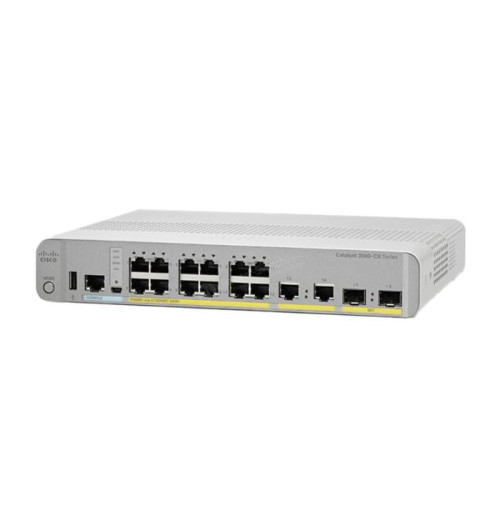
Condition: New
Product Code: WS-C3560CX-12PC-S-N
Overview of Cisco Catalyst WS-C3560CX-12PC-S PoE IP Base Compact Switch | New
The Cisco..
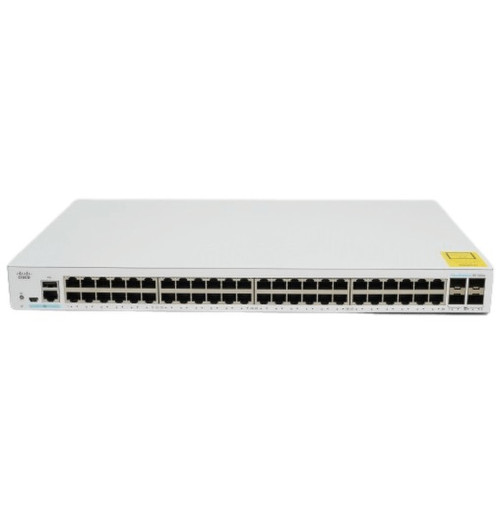
Condition: New
Product Code: CBS250-48T-4X-NA-LN
Overview of Cisco CBS250-48T-4X 48-Port Gigabit Ethernet Smart Switch with SFP (CBS250-48T-4X-NA) | ..
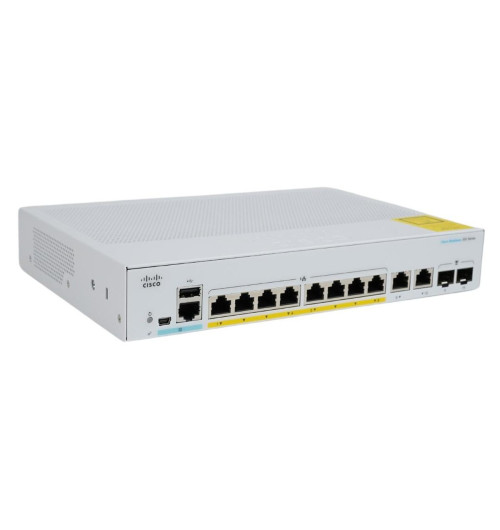
Condition: New
Product Code: CBS350-8P-E-2G-NA-N
Overview for Cisco CBS350-8P-E-2G 8-Port Gigabit PoE+ Managed Network Switch with SFP/RJ45 Combo (NA..


Information
Customer Service
My Account
©2026 ITHS Provider (A Project of Mehta Corp.) - All Rights Reserved.
