

Your shopping cart is empty!
 Call us: +1-(437)-290-7537
5 Signs Your Business Firewall Needs an Upgrade
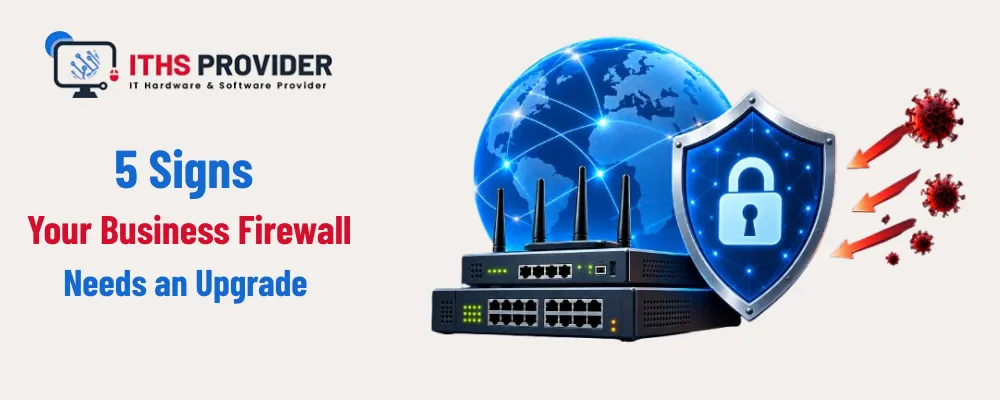
A business firewall uietly protects your organization every day. It checks incoming and outgoing traffic, blocks suspicious connections, supports secure remote access, and helps keep unauthorized users away from important systems.
But a firewall is not something you install once and forget. Your business changes, internet speeds increase, employees use more cloud applications, and cyber threats continue to evolve. A firewall that was suitable a few years ago may now be slow, unsupported, or missing essential security controls.
So how do you know when it is time for an upgrade? These five signs can help you make the right decision.
1. Your Firewall Is No Longer Receiving Security Updates
Security updates are one of the clearest indicators of whether your firewall is still trustworthy. Manufacturers release firmware updates to correct vulnerabilities, improve reliability, and support newer security features.
If your firewall has reached its end-of-life date, the manufacturer may no longer provide regular updates or technical support. The device may continue to function, but it will gradually become less prepared to handle current network security threats .
A firewall review should answer these questions:
|
|
|
|
|
|
|
|
|
|
|
|
|
|
|
If the answers are unclear, check the manufacturer’s product-lifecycle information. When a firewall is no longer supported, replacing it is generally safer than continuing to depend on outdated protection.
You can also review CISA’s guidance for small and medium businesses for practical advice on maintaining secure business systems.
2. Your Network Has Become Slow or Unreliable
A firewall has to inspect and process network traffic before it reaches your systems. As your company grows, the amount of traffic it handles also increases.
New employees, faster internet service, video conferencing, cloud software, large file transfers, and remote-access VPNs can all place additional pressure on older hardware. Advanced security features, including malware inspection and intrusion prevention, require even more processing power.
You may be dealing with an overloaded firewall if employees regularly experience slow applications, dropped video calls, unstable VPN connections, or delays when accessing cloud platforms.
A useful performance comparison looks like this:
|
|
|
|
|
|
|
|
|
|
|
|
|
|
|
Do not judge a firewall only by its advertised maximum speed. A device may handle ordinary traffic well but slow down considerably when intrusion prevention, web filtering, or encrypted traffic inspection is enabled.
ITHS Provider offers Cisco firewall solutions and Fortinet firewall products for organizations reviewing their network security hardware options.
3. Your Business Network Has Outgrown the Existing Device
A firewall that worked well for a small office may not be suitable after your organization expands. Perhaps you have opened another location, introduced guest Wi-Fi, added IP phones and cameras, or moved important applications to the cloud.
Your firewall should give you clear control over users, devices, locations, and applications. If it cannot do that, your business network security may be more complicated and more vulnerable, than it needs to be.
Signs of an undersized or outdated setup include:
- Remote-access VPN connections are unreliable.
- Guest and employee traffic cannot be separated properly.
- Branch offices require complicated workarounds.
- Devices such as cameras and phones share unrestricted access with business systems.
- Your IT team cannot apply different policies to different users or applications.
Network segmentation is particularly important. Separating guest devices, employee systems, servers, and business equipment can help limit the damage if one account or device is compromised.
A modern firewall can make these policies easier to create and manage. For organizations comparing hardware, the Cisco Firepower 2100 Series and Fortinet FortiGate solutions are examples of platforms designed for larger and more demanding network environments.
4. Your Firewall Lacks Modern Security Features
Traditional firewalls mainly control traffic using IP addresses, ports, and protocols. These controls remain useful, but modern attacks often require deeper inspection.
A next-generation firewall can identify applications, users, and suspicious behavior in greater detail. Depending on the product and license, it may include intrusion prevention, malware detection, web filtering, DNS security, application control, threat-intelligence updates, and detailed activity logging.
For example, a traditional firewall might allow traffic through an approved port without understanding the application using it. A next-generation firewall can recognize the application, identify unusual behavior, and apply a policy based on the user or device.
The right features depend on your business. A small office may prioritize secure remote access and web filtering, while a larger organization may need segmentation, centralized management, advanced reporting, and encrypted traffic inspection.
The important question is not whether your firewall has every available feature. The question is whether it has the protection and visibility your business currently requires.
5. Firewall Management Has Become Difficult
Even a powerful firewall can become a weakness if it is poorly managed. Over time, rules are added for temporary projects, former employees retain access, and outdated settings remain active because no one has reviewed them.
This is a common problem for growing businesses. The firewall continues running, but no one has a complete understanding of its configuration.
Consider an upgrade or a managed solution if your team struggles with:
- Reviewing and removing outdated rules
- Controlling administrator access
- Investigating suspicious traffic
- Keeping configuration backups
- Understanding security alerts
- Documenting firewall changes
- Applying firmware updates consistently
This is where managed firewall services can help. A qualified provider may monitor alerts, review firewall rules, apply updates, maintain configuration backups, and assist with incident response.
Before hiring a provider, ask about response times, monitoring coverage, reporting, update responsibilities, rule reviews, and how administrator accounts are protected.
What Happens If You Keep Using an Outdated Firewall?
An outdated firewall does not always stop working suddenly. The greater risk is that it continues operating while providing weaker protection and poorer performance than your business assumes.
The possible consequences include unauthorized access, malware infections, exposed customer data, unreliable remote access, network outages, and compliance problems. Recovery costs can also be much higher than the cost of replacing the firewall at the right time.
A firewall is an important part of business cybersecurity protection, but it should not work alone. Your broader security plan should also include multi-factor authentication, endpoint protection, timely software updates, secure backups, employee awareness training, and carefully managed user permissions.
The NIST Small Business Cybersecurity resources provide useful guidance for strengthening these related controls.
Upgrade or Replace Your Business Firewall?
An upgrade may be enough when the device is still supported, has adequate processing capacity, and can run the features your business needs. A complete replacement is usually the better choice when the firewall is no longer supported, cannot handle your internet speed, lacks modern security controls, or has become difficult to manage.
Use this quick assessment:
|
|
|
|
|
|
|
|
|
|
|
|
|
|
|
|
|
|
Before making any change, document the existing configuration, create and test a backup, schedule the work during a quieter period, and prepare a rollback plan.
How to Choose the Right Firewall
Start with your current network rather than choosing a product based only on brand or price. Consider the number of users and devices, internet speed, VPN requirements, branch locations, cloud applications, security features, reporting needs, and expected growth.
The most suitable firewall should provide enough capacity with security services enabled. It should also be supported by the manufacturer for several years and be manageable by your internal team or a trusted service provider.
A cheaper device may cost more in the long run if it becomes a performance bottleneck or requires replacement soon after installation.
A business firewall is an important part of your network security. It controls incoming and outgoing traffic, supports secure remote access, and helps protect business systems from unauthorized connections.
However, firewall equipment does not last forever. Older hardware may become unsupported, struggle with faster internet connections, lack modern security features, or become difficult to manage as the business grows.
Knowing when to replace or upgrade a firewall can help prevent unexpected downtime, security gaps, and performance problems. The following questions explain the main warning signs and planning considerations.
Frequently Asked Questions
A firewall upgrade should be based on the condition of the equipment, the needs of the business, and the level of risk involved. Reviewing these factors early gives your team more time to compare options and plan the change without unnecessary disruption.
Final Thoughts
Your business firewall should support your business, not slow it down, limit its growth, or create uncertainty about your security.
If your firewall is unsupported, consistently overloaded, unable to manage your expanding network, missing modern protection, or difficult to maintain, it is time to assess an upgrade. The right solution can improve performance, strengthen access controls, and reduce exposure to changing network security threats.
Review your firewall before a breach or major outage makes the decision for you.
Need Help Upgrading Your Business Firewall?An outdated, overloaded, or unsupported firewall can affect your performance and increase security risks. Our team can help you assess your current firewall, compare upgrade options, and plan a practical security solution for your business. |

Leave a Reply
Your email address cannot be published. Required fields are marked*


Information
Customer Service
My Account
©2026 ITHS Provider (A Project of Mehta Corp.) - All Rights Reserved.

No comments